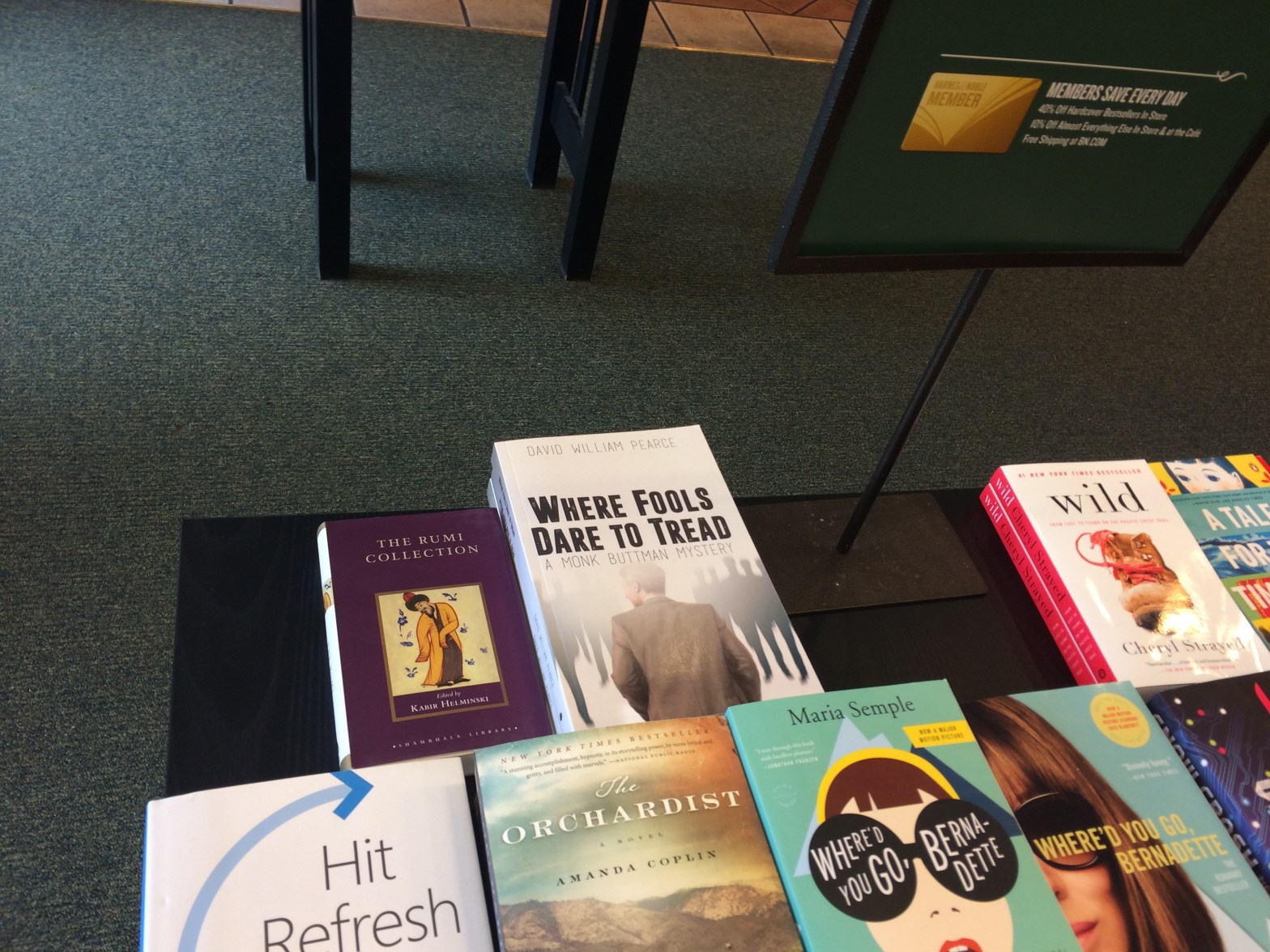
The Need to Get This Done!


At some point the question of why one creatives comes up. Always. People who don’t see themselves as creative are fascinated by those who are. I think everyone would like to be creative, and personally, I think everyone can be; it’s the doing, the taking the first steps, the apprenticeship, if you will, that tends to dissuade them. That and failure to live up to a self-inflicted desire for a kind of laudatory final product.

There ought to be joy in the journey. Right?

This is further complicated by those who get things done, which isn’t necessarily a knock on those that don’t or procrastinate or take forever to finish something for any number of reasons, but it tends to be intimidating to those struggling to get where they want to go.

And those who are productive will have any number of reasons why- the Internet is a font for how to: be it organization, routine, functionality, drive, etc.

For me, it’s a compulsion: I have to get this done because… I won’t be around forever.

And yes, I recognize how that sounds. But, in truth, it’s the driving force that gets me moving, keeps me focused, and keeps me from blowing the whole day watching all of season 2 of The Twilight Zone.

I need to get this done.

This does not mean I forsake quality for productivity. I still take the time to make sure that what I’m working on, be it a book or album (shameless plug: you can hear my music at mrprimitivemusic), is up to my demanding standards. It’s the “This is stuck in my head and it needs to get out” conundrum.

Once I get an idea for a song or a story, I feel compelled to complete it. Having it in my head does no good if I’d like to share it or if I feel the need to have it out there so in some indeterminate future, family, friends, or the masses will be able to see or hear for themselves if it’s any good.

And as I’ve said, it’s not a matter of quantity. Many writers spend years working on a book, but they still strive to finish it, to have it done. It is, after all, what we are remembered for at the end of the day.

Hopefully.

©2019 David William Pearce

An Appreciation-Russell Baker

Russell Baker, the noted columnist for the New York Times, who passed away earlier this year, was, like the best chroniclers of American life, clear eyed with a dry wit and perhaps ironically when read now, an understanding that no matter of much things change; so much remains the same.

This becomes apparent when reading his collection of columns from the 1070’s in the book, So This Is Depravity. In it, he explores, in his own inimical style, dysfunctional government, boorish politicians chasing the money and lying for the benefit of inattentive constituents, pointless destructive war, sexism, racism, the allure and corruption of the American myth, bad parents, and the new generation that has no thought for the old. He also notes our never-ending fetishing of personal habits and vices.

Sound familiar?

We are certain that we are so much better, more knowledgeable, and prescient of what the future holds than those who trod the earth before. We are also forlorn, depressed, and certain that the old days were so much better. As Americans, we held the exact same views 40 plus years ago.

Having been a teen in those years, witnessing the high of the moon landing, the lows of Vietnam, Nixon, domestic terror; the apex of Rock and Roll, sexual hendonish before scourge of AIDS, all of the essays in Baker’s book bring back a flood of memories and the tacit acknowledgment that we are fighting the same internal wars again and again.

The beauty of Baker’s writing is the humor he infuses into it. Like his contemporary, Art Buchwald, he recognized the comic nature of modern cultural life in America. A fine example is his parody of a Times food critic’s (Craig Claiborne) gastronomic feast by juxtaposing his own futile attempt to replicate it in his small understocked New York apartment kitchen. It is a small piece that so expertly mines the American fascination with the obscenities of wealth and privilege, and our desire to somehow take it for our own, as if we too are living the great American dream.

To read So This Is Depravity today, is to see, that in character, so little has changed in this country, both good and bad. That there has been substantive change in how we approach race, gender, inequality, and supplication or rejection of our supposed national myths, only reinforces the understanding-assuming you have any interest in understanding-of how long the road is and how little of it we have truly traveled.

In the 70’s we warred with each other over the very things we are warring over with each other now. The thing we miss, or most need, I believe, is what Baker provides: a wry knowing, yet gentle humor that gives the reader a moment of pause to both laugh and perhaps consider the idocies we perpetuate for no other reason than to aggravate those who aggravate us.

It’s an idiots circular firing squad made all the more galling by those who profit by it. Whether it’s a good thing or a bad thing that we continue down this particular road is somewhat cliched since there is no mad desire to get off it, but rather the doleful hope that somehow in the perfid pit that is our political life a savior will arise.

Russell Baker in his fine prose assures us that we are not alone in history when it comes these hopes and desires that we are not the first, and unlikely the last-and yes, there were doomsdayers then too-to suffer through it.

©2019 David William Pearce

The Long Goodbye-An Appreciation

In the world of fictional detectives, few are as well thought of, certainly as an archetype, as Philip Marlowe, creation of Raymond Chandler. He is the conscience of a gritty amoral world that deludes itself with fictions of justice and worth, that melt under the harsh lights of avarice, hubris, and folly. Characters dream big, connive, lie, and strut, all in a futile effort to exert control where there is none. Roll it in murder and add a disdainful sceptical detective and you find the perfect vehicle in which to see the world as it is.

Or as Chandler did.

Much is made of the fact that The Long Goodbye is perhaps the most autobiographical of Chandler’s Marlowe series. It is definitely the longest and the most meditative and vitriolic in its social commentary. His wife’s sickness, his alcoholism, and his struggles to finish the book, along with his desire to break out of the limitations of the genre can be seen in the characters and arc of the story.

At its core the book is about writers and books and how they are often not what we at first think.

The story begins and ends with Marlowe’s friendship with Terry Lennox, a sad fated man with an adulterous wife, whom is suspected of killing before he kills himself. Marlowe, through his friendship with Lennox, is thrust into the affair and its attendant consequences. The middle of the story concerns Roger and Eileen Wade, a drunk writer and his troubled wife. In addition there are crooks, cops, imperious rich men and flunkies. That they are all connected is typical of the genre and of Chandler’s particular brand of plotting.

A number of reviewers have noted the length of the book and its sometimes meandering pace. I think that was deliberate. If you step back and view it less as a straight up detective novel and more as a literary book that happens to have a detective as a character, then the meditative nature of the book begins to come through. Chandler was known to have bristled at the notion that crime novels, noir, cannot be literary, and to me, this explains the tone the book.

Lennox is a nice metaphor for the book just as Roger Wade is for the writer. Much is made of similarities between Chandler and Wade, and that may be true, but it is also a meditation on being known, being famous for, and then a captive of, a particular genre. Wade’s books are steamy romance novels that sell, but that Wade comes to despise as well as the closeted world of wealth and privilege he can’t escape. The book that Wade can’t seem to finish, that Marlowe is asked to help Wade complete by mediating his baser impulses, is like Lennox, present in thought, but defined more by desire than fact.

Though not thought of as literary fiction, The Long Goodbye is in fact that, with its jaundiced meditations on justice, wealth, and corruption ably communicated by Marlowe, Wade, the Cop Bernie Ohls (a reference back to The Big Sleep, the novel that made Chandler famous, but also boxed him in), as well as others in that crisp bright dialogue and prose Chandler is celebrated for. There is also the interior struggle of Marlowe to be something more honest, less venal, than those he comes in contact with. That Marlowe is solitary, remote, plays well into the theme of writer, observer; a chronicler of the moral decline he sees around him.

In the end, that Lennox, paradoxically like the book, is not what he at first seemed, is fitting given the lyrical landscape of the book, and while Marlowe claims to judge not, his every biting word is judgement rendered.

The question for the reader, is what is being judged.

©2019 David William Pearce

Review-The Blue Rat

On its surface, The Blue Rat, by Michael Hartnett, is the story of an immoral real estate magnate, bent on stamping his name across New York through odious and ugly buildings, blighting the landscape of Manhattan, and those fighting to preserve the beauty and history of a city they cherish.

Leading this fight is El Buscador, aka the Tour Guide, a man lost to sorrow yet immutably tied to the history, pathos, and joy of being a New Yorker. A renowned repository of the history and underside of greater gotham, he is joined by a gallery of characters from a young reporter, Pratt, going a little too deep into his own underground investigations, the reporter’s weary editor, Mavis, and the titular Timothy Terrance Tolland, the object of their hatred and scorn.

As befits New York, Tolland is all about himself in all aspects, from his buildings, collections, and the stories he weaves, to the corruption, narcissism, and hubris he embodies. The question is whether he has the right, by any means, to stamp New York with his particular brand of awful, including the spread of blue rats. To El Buscador the answer is no, and he’s willing to employ any actions to stop Tolland.

The difference between them is whether there is a line to be drawn in how far they will go.

The joy of The Blue Rat is multifaceted. It’s not just the story, which hums along and never drags, nor the writing, which is crisp and clever. Like all good story tellers, Hartnett imbues his book not only with the here and now of the story, but of its place in the greater history of a city he clearly loves, that stretches both above and below what we see, or think we see. Like all great cities beyond a certain age, New York is its history, which Hartnett shares through El Buscador.

Then there is the social satire, clearly in Tolland, of a man so possessed of himself that no act is too brazen or foul, and how he personifies the zeitgeist of this particular age. In a twist of irony, Tolland is offended by any comparisons to Trump, whom he considers a fraud, even as he covets a fraudulent piece of Trumpian history.

That however, is hardly the beginning or end, for there are all those whose lives are impacted by people like Tolland and the damage they do in both large and small ways. For El Buscador and his allies, the very people Tolland abuses and degrades, the question is how much of that they can stand.

I highly recommend this book.

©2019 David William Pearce

Judith

Judith is Monk’s other love. She has certain peculiarities that Monk sometimes struggles with. Fair warning, the following is erotic in nature.

“You don’t like me this way?” She was laughing at me, at my discomfort.

“It’s just unusual, that’s all.” I was trying to be nonchalant.

Judith leaned against the edge of the large sliding doors that opened to the pool and the city beyond. She ran her finger from her lips to her navel, taking a slow detour around the areolas of her breasts, before finishing at the trimmed tuft of hair where her legs came together.

“It’s completely natural. See?” she said. It was hard not to see as she widened her stance.

“Yes, it’s fairly obvious,” I agreed. Vividly obvious.

“Are you going to just sit there?”

“I’m simply enjoying the view,” I said.

“Of me, or what’s behind me?” She turned and pointed to the cityscapes, making sure I also got a fine view of her behind.

“Both.”

“I think it would be more polite if you viewed them from here, next to me…”

“Would you? I didn’t know we were being polite.”

“For the moment.”

Judith put her hands behind her back which allowed her hips to tilt forward every so slightly. It was hard, no pun intended, not to stare, but my staring was the point. She knew that, liked that, and made a point of it being obvious.

Judith liked to be naked.

I got off the couch and went to where she stood. Close. She took my hand and retraced the path her hand had taken only moments before.

“Am I making you nervous, Monk?”

“Not at all. I often find myself next to beautiful women who have a penchant for not wearing any clothes,” I lied.

“Do you?”

Our hands had reached the trimmed tuft of hair.

“All the time,” I assured her.

She turned her head slightly, exposing her neck to me. “And what do you do when you’re in the company of all these women who have a penchant for not wearing any clothes?”

I brushed the hair off her neck with my free hand. “Mostly, we discuss politics and the weather.” I began lightly kissing her neck.

She moved my hand below the tuft of hair. “How interesting…”

“Yes, it is.” I kissed my way from her neck to her lips.

“Anything else?” she asked between kisses.

“Only whether I might become accustomed to naked women and not be so aroused as, say, I am now…”

Judith looked me in the eyes as my fingers continued the patterns that caused her breathing to pick up and her legs to shake.

“I’ll take that chance,” she moaned.

©2019 David William Pearce

The Joy of Editing…

There is no greater joy, no more profound exercise in existential ennui, than staring at almost 400 pages of story that are in need of editing. The journey…

Or, as the kids say, time suck!

But as any writer worth their salt will admit, every write needs a rewrite before it’s considered ready for public consumption. This is because there are always mistakes that are caught or cared about during editing. The process, naturally, starts with getting the story out of thy head before you go nuts. Editing is the external struggle to produce its finite form and goes beyond simple errors in spelling and grammar.

I don’t know that there’s any joy to it, and most writers are not fond of it even if they’re well aware of its importance. It is what it is in the utilitarian sense, but often there is that, which seemed important once-to the story-but is less so now, and there are those clever little moments within the story that you love that have no compelling purpose and, as the saying goes, must be killed.

There’s a book for you: great lines from great authors that were killed for the purposes of producing a tighter, more cogent book. That is the mission, the holy grail, the motivation for going over the same lines time and time again.

Of course, not everyone is enamored with the idea of tight and concise; some prefer rambling and long-winded, which is where self-publishing come in. But seriously folks, editing is simply part of the gig.

I bring this up because I am in the middle of the editing slog for the second book in the Monk Buttman series, and as with all things, I like to believe I’m learning something along the way.

Whether I actually have will soon become clear.

And if not? Well, I can edit that out.

©2019 David William Pearce

Read, Read, Read

I read a lot these days and I think that’s a good thing… for the most part. Inevitably, you’ll find yourself reading something quite terrible and will face the necessary question of whether to continue. That question is generally predicated on whether you’re reading it because you want to or because you feel obligated or… you agreed to.

This is all to the best because, if you’re a writer yourself, you will at some point, ask someone to read what you’ve written. And while they may love it; they might also find it terrible.

That’s not the end of the world… and you will realize this after you come out of your darkened room some days later…

But back to reading.

I read both for elucidation and for a greater sense of what people are thinking. Also, cheap laughs. I think that’s important. And because there is so much that has been written over the years, it can give you an insight into the times when the book was written and to how writing changes over generations. Classic literature simply means it’s old and has some relevance to the human condition of that time, or is meant to torture young people who don’t have the experience to truly understand what the writer is trying to say.

James Joyce makes a lot more sense at 50 than 18. Just saying.

Reading make a writer better at the craft. it just does. You read, it percolates down into the strata of the brain that makes you stare at the page, or screen, until something wonderful come out. It doesn’t have to be your style or genre-I’m a big believer in reading outside the genre you write in-to make you a better writer.

Yes, this is not new news, but it bears repeating because it’s true.

I read that somewhere.

©2019 David William Pearce

Jordan

This short is unlike any of the others. It is written in third person, and it deals with a character who is only mentioned, but does not appear, in the book, Where Fools Dare to Tread. Jordan, is Agnes’ abusive former boyfriend, and in the book, it’s noted that Johnny D, Agnes’ boss, has Jordan taken care after he nearly kills Agnes.

He was held up by two men the size of linebackers. Blood was running down his chin, the result of his lip being split by a fist driving it into his teeth. A number of ribs were broken on his left side, making it hard for Jordan to breathe.

“Stay with me, Jordan,” the tall man the linebackers called Billy Ray cautioned him, “we’re not finished.

Jordan whimpered. The earlier bravado had left him quickly after the first of Billy Ray’s blows broke his ribs. No word play ensued, no clever back and forth between him and his assailants, and most important, there was no escape.

They grabbed him not far from the apartment where he’d worked the woman over, given her what he thought she deserved. She’d asked for it; he’d told her any number of times what would happen. You can’t be angry or surprised when warnings are carried out.

And yet, he was surprised. Johnny had warned him, but he didn’t listen. She wasn’t worth a fuck to begin with, he told himself. Why would Johnny care?

Billy Ray broke Jordan’s nose with a left cross. Jordan could only groan much as he tried to scream. No air. A hook to the solar plexus left him limp. Billy Ray brushed off his hands and the linebackers let go of bloody mess between them.

“Johnny is a reasonable man, eye for an eye, tooth for a tooth, and as you did not kill the woman, he sees no need to kill you so long as you stay out of California.” Billy Ray kneeled down and faced Jordan Dekker. “Unfortunately, we’re in Nevada now and certain individuals here have issues with you as well.” Billy Ray shook his head and sighed. “Neils Dornan isn’t as understanding.”

Jordan watched as Billy Ray got up and grabbed the bat off the hood of the car. “Please,” dribbled out of his mouth along with the drool and blood.

Billy Ray raised the bat over his head.

Jordan’s last act on earth was to cry.

What’s Next?

When you first start writing, the big thrill is finishing something, be it a great sentence, paragraph, chapter, short story, book. Something you’re willing to show someone.

Then it’s on to the next thing, which is…

Writing, I’ve come to find, is the insatiable beast that must be fed less ye wish to find yourself back in the obilion of irrelevance! I don’t actually believe that, but, it is true that a one off, be it a poem, article, short story, or book, needs to be followed up.

Unless, you’re J D Salinger.

The answer I glommed onto was the series, for the very good reason that I fell in love with the main characters and wanted to continue telling their story. That’s all fine and dandy until you have to actually get into the weeds of what they’re up to in the next installment. To get there I use themes, big overarching ideas under which I base the story.

For instance, in the first Monk book, Where Fools Dare to Tread, the major themes were identity and redemption, and they were woven into the story and characters of Monk and Agnes. in the following books (there are 5 at this point), the themes were family and religion, death, war, and politics. the 6th book will focus on gender and corruption. Fun stuff.

It’s fun only when you’ve set a direction and can see the road ahead. Before that it’s, ok, I have an idea, how do I turn that into a story?

I start with where Monk is in his life and how the story impacts him and those around him. From there, it’s where he ends up-how the story ends. At that point, we get to the meat and potatoes-which for me is the best part-which is getting him and the others from beginning to end. Character development, and the chaos relationships endure, comes in the small interactions and I find that they will drive the story as well, because that informs both the reader and the characters. That and the plot has to make some sort of sense.

Then, when you finish, you can sit back for 5 minutes luxuriating in what you’ve accomplished before the mind-numbing process of editing kicks in.

Good times.

©2019 David William Pearce

Bernie

Bernie Schoor is the owner of a auto repair shop that specializes in older classical cars, such as Monk’s beloved ’64 Ford Falcon convertible. Bernie also runs a backdoor information business, that may or may not be based on his previous life in the intelligence services.

“Do you have a number where I can reach you?”

“I have an answering machine; you can leave a message there,” I replied.

Bernie Schoor sat back in his chair, a wide grin upon his face. “No phone?”

“No phone.”

“Any particular reason you don’t carry one?” he asked.

“Don’t need one.”

“Really?” Bernie seemed unusually animated.

This was my second visit with the Falcon, a relic from 1964 and not exactly a collector’s dream, but it was a convertible built for a town in love with such things and I’d kept it in good shape, something Bernie admired.

“Wow, a ’64, not many of these left. I see it goes with the clothes,” he winked as he said this the first time I brought it in.

I have a passion for the clothing of the fifties and sixties, a style I prefer over jeans and tee shirts, or God forbid, shorts.

There was no need for a call the first time.

“Shouldn’t a guy who runs errands for an outfit such as Aeschylus and Associates have the standard means of communication so prevalent in this day and age?”

“How do you know I work for Aeschylus and Associates?” I was surprised he knew.

“Didn’t you tell me the first time you were here?”

“I know I didn’t.”

“That’s right, it was just before you started.” Bernie motioned to the chair beside his desk, “Have a seat, Monk.”

After hesitating, I sat down. “How do you know where I work?”

“I’m a curious guy.”

Uh-huh. “You run a garage, who cares where I work if I have the money for whatever maintenance the car needs?”

“It does seem contradictory, doesn’t it?”

“Or invasive,” I answered.

“So, no phone…”

“No phone.”

“What about emergencies? What if there’s no time to spare?” He was fixated on this phone thing.

“There always time, and if not…well, then there’s not. People have survived for a million years without this artificial tether; I can too. As for emergencies and the like, I’ll figure out something. Besides, if you’re careful emergencies are rare and if you’re nobody special it won’t matter.” I had my reasons.

“Interesting.” Bernie leaned forward, a sparkle in his eye. “And the possibility of surveillance, of your being tracked, accounted for, isn’t part of the equation? It’s the lack of importance, the social anonymity, the being a nobody.”

“Something like that.”

“But you worry nonetheless?”

“Concern, not worry,” I countered.

“Of?”

“Of the capitalistic militaristic machine and its bureaucracy.” I was channeling Moses, wondering if Bernie knew about him. “I prefer anonymity.”

“Yet I know about you.” He continued smiling at me.

“Do you? And if you do, you had to work at it, no?”

“I did.”

“Why then would I hand myself over on a silver platter just for the convenience of knowing the weather or traffic at any given time. It’d spoil the surprise.”

“Some people like to have the weather and traffic at their beck and call,” was his retort.

“People are fools who know not what they do,” was mine.

“Perhaps, but the day may come when your recalcitrance will be overmatched by circumstance or desire,” he warned.

I laughed. “I don’t see that happening, but thanks for the warning.”

Bernie Schoor got up; as did I. Outside the cab was waiting. “The Falcon should be ready tomorrow,” he told me as I got in the cab.

“If not, leave me a message,” I said.

I left him shaking his head.

©2019 David William Pearce